The center speaker carries most movie and TV dialogue, so choosing the right model can make voices clearer, more natural, and easier to follow at any volume.
This roundup compares 10 center channel speakers across premium, slim, compact, and budget-friendly designs to help you match performance and placement needs.
Best 10 Center Channel Speakers Picks for 2026
Efficient Dialogue
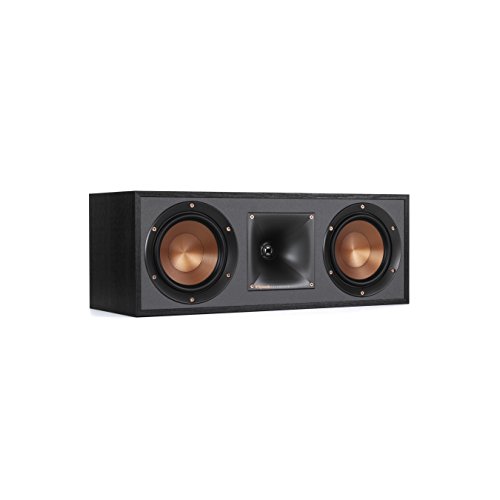
- Dual 5.25-inch spun-copper IMG woofers
- Aluminum LTS tweeter with Tractrix horn
- 95 dB sensitivity for efficient output
Best For: Efficient home-theater dialogue in a compact center speaker
Three-Way Clarity

- True three-way crossover design
- Dual 5.25-inch woofers with rear-ported cabinet
- Clear output at high volumes
Best For: Premium home theaters prioritizing dialogue clarity and power
Flagship Front Stage

- Four Cerametallic woofers
- Larger 90° x 90° hybrid Tractrix horn
- Braced cabinet with magnetic grille
Best For: Large surround systems needing a powerful premium center channel
Low-Profile Placement

- Slim 4-inch-tall cabinet
- Four 3-inch woofers and 1-inch tweeter
- Wall-mountable and Dolby Atmos compatible
Best For: TV setups needing a slim center speaker that will not block the screen
Compact Sony Clarity

- Two 3.94-inch woofers and precision tweeter
- Bass-reflex enclosure for fuller low end
- Compact tabletop design for small spaces
Best For: Small-space Sony home theater setups
Slim Cinematic Impact
Polk Audio Signature Elite ES35

- Six 3-inch woofers with a 1-inch tweeter
- Slim shelf or wall-mountable design
- Power Port technology targets cleaner bass
Best For: Slim TV installations and immersive home theaters
Fast HD-Sound Response
Yamaha NS-C210BL Center Speaker

- Light aluminum-cone woofers for quick response
- 2-way bass-reflex design for HD sources
- Compact piano-black tabletop cabinet
Best For: Compact wired movie and music systems
Polk Audio TL1
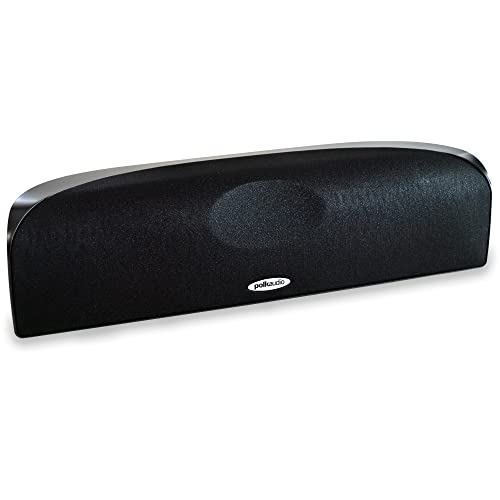
- Compact shelf- or wall-mount design
- Time Lens technology for imaging
- Gloss-black finish for flat-panel TVs
Best For: Small, space-conscious home theaters
Polk Monitor XT30
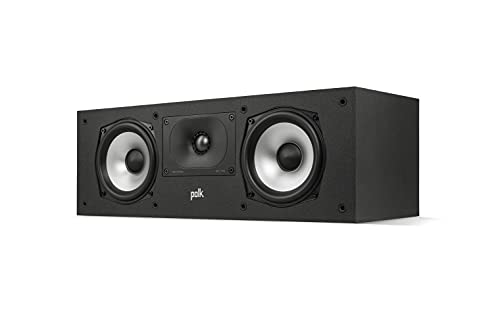
- Dual 5.25-inch woofers
- 1-inch tweeter for detailed sound
- Works with 4- and 8-ohm systems
Best For: Expandable home theater and gaming setups
Polk T30
Full-Range Home Theater Center
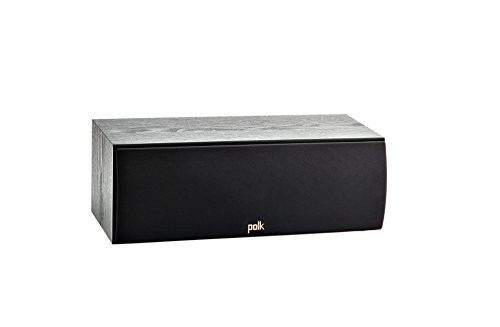
- Dual 5.25-inch woofers
- Timbre-matched to Polk T-Series
- Tuned rear port for punchy bass
Best For: First home theaters and Polk T-Series systems
Efficient Dialogue – Klipsch R-52C
The Klipsch R-52C is a practical choice for shoppers seeking center channel speakers with clear dialogue and straightforward home-theater compatibility. Its dual 5.25-inch spun-copper IMG woofers, aluminum LTS tweeter, and 90° x 90° Tractrix horn are designed for detailed sound from a relatively compact cabinet.
Best For: Home-theater buyers who want an efficient, horn-loaded center speaker for clear movie and TV dialogue.
Pros:
- Dual 5.25-inch spun-copper IMG woofers support strong, detailed output.
- Aluminum LTS tweeter and Tractrix horn are designed for clear high frequencies.
- 95 dB sensitivity can make it an efficient match for many receivers.
Cons:
- Its 89Hz–21kHz ±3dB frequency range may leave the deepest bass to a subwoofer.
- The cabinet is not waterproof and uses a wired connection.
With a 18.75-inch width and 13.5-pound weight, the R-52C fits many conventional front-stage setups. It is a sensible option when efficiency, recognizable Klipsch voicing, and dialogue intelligibility matter more than a premium three-way design.
Three-Way Clarity – SVS Prime Center
The SVS Prime Center is built for listeners who want center channel speakers to carry dialogue, vocals, and front-stage detail with authority. Its true three-way crossover, dual 5.25-inch woofers, and one-inch aluminum dome tweeter prioritize smooth transitions, clarity, and broad sound dispersion.
Best For: Dedicated home-theater systems needing a powerful, detailed center channel with a premium three-way design.
Pros:
- True three-way crossover supports smooth driver transitions and phase coherence.
- Aluminum dome tweeter is designed to remain clear at high volumes.
- Rear-ported cabinet and dual woofers support enhanced bass output.
- Rated for up to 200 watts of maximum output power.
Cons:
- The 23-inch-wide, 20-pound cabinet requires substantial shelf or stand space.
- It is wired only and has no wireless communication technology.
The Prime Center’s larger cabinet and three-way architecture make it a strong fit for serious surround systems, especially where vocal realism and high-output performance are priorities. Measure your placement area carefully before buying.
Flagship Front Stage – Klipsch RP-504C II
The Klipsch Reference Premiere RP-504C II is a substantial center channel speaker for buyers who want a more advanced front-stage design. It combines a larger 90° x 90° hybrid Tractrix horn, vented titanium LTS tweeter, four updated Cerametallic woofers, and a braced cabinet.
Best For: Large home-theater setups seeking detailed dialogue, strong dynamics, and a premium-looking center speaker.
Pros:
- Four 5.25-inch Cerametallic woofers support powerful, efficient reproduction.
- Larger hybrid Tractrix horn is designed for crisp, clear dialogue.
- Vented titanium LTS tweeter helps reduce distortion and add detail.
- Braced, divided cabinet helps minimize vibration.
Cons:
- At 32.06 inches wide and 36 pounds, it needs generous placement space.
- Its large cabinet may not suit compact TV consoles.
- The speaker uses a wired connection and is not waterproof.
The RP-504C II is best viewed as a centerpiece for a capable surround system rather than a small upgrade. Its size, driver array, and cabinet construction favor buyers with room for a high-output, premium center channel.
Low-Profile Placement – Polk Monitor XT35
The Polk Monitor XT35 is a slim center channel speaker designed for setups where a conventional cabinet could block the TV or infrared sensor. Its one-inch Terylene tweeter and four three-inch dynamically balanced woofers deliver a compact, hi-res-compatible design that can sit below a display or mount on a wall.
Best For: TV-based home theaters that need a slim, wall-mountable center speaker.
Pros:
- Four-inch-tall profile helps it fit below many TVs without blocking the display.
- Four 3-inch woofers and a 1-inch Terylene tweeter support focused dialogue and open midrange.
- Compatible with Dolby Atmos and DTS:X systems.
- Supports 4- and 8-ohm operation and recommended amplifier power of 25–200 watts per channel.
Cons:
- Its slim design uses smaller 3-inch woofers than the other listed center speakers.
- The 24-inch-wide cabinet still requires a reasonably wide placement surface.
The XT35 is a practical answer to placement constraints. Choose it when a low-profile enclosure, wall-mount flexibility, and compatibility with Polk’s Monitor XT system are more important than the larger-driver scale of a full-size center speaker.
Compact Sony Clarity – Sony SS-CS8M2 Center Channel
The Sony SS-CS8M2 is a practical choice for shoppers building a compact home theater around Sony equipment. This center channel speaker uses two 3.94-inch woofers, a precision tweeter, and a bass-reflex enclosure to support clear dialogue and fuller low-frequency sound.
Best For: Small-space home theaters and Sony AV receiver setups.
Pros:
- Two woofers and a high-precision tweeter support clear vocal reproduction.
- Bass-reflex enclosure is designed for low-frequency sound with reduced distortion.
- Compact tabletop design suits smaller spaces.
- Reinforced cellular cone helps support undistorted audio.
Cons:
- Its 55 Hz frequency response may leave the deepest bass to a subwoofer.
- Designed for corded, tabletop use rather than wireless placement.
- Its Sony-focused matching makes it less of a universal brand-pairing choice.
With a 6-ohm impedance and up to 290 watts of stated maximum output power, the SS-CS8M2 offers a straightforward, compact center-channel solution. It is especially sensible when clear dialogue and easy integration with Sony components matter more than a slim wall-mounted profile.
Slim Cinematic Impact – Polk Audio Signature Elite ES35
The Polk Audio Signature Elite ES35 is a slim center channel speaker designed to deliver prominent dialogue and room-filling sound without taking up as much visual space as a traditional cabinet. Its six 3-inch woofers, 1-inch Terylene tweeter, cascading crossovers, and Power Port technology target clear, impactful home theater audio.
Best For: Slim TV setups, wall-mounted installations, and home theater, gaming, or music listening.
Pros:
- Six 3-inch woofers and a 1-inch tweeter support detailed, spacious sound.
- Slim design can sit on a shelf or be wall-mounted below a TV.
- Power Port technology is designed to provide cleaner, more dramatic bass.
- 4- and 8-ohm compatibility supports a range of AV receiver configurations.
Cons:
- Shelf or stand for placement is sold separately.
- At 20 inches wide and 7.5 inches high, it may still require careful TV-console planning.
- It is a wired speaker, not a wireless center-channel solution.
The ES35 stands out for shoppers who want a low-profile speaker with substantial driver coverage. Its wall-mount and shelf-placement options make it flexible, while the stated 150-watt maximum output and Dolby Atmos/DTS:X AVR compatibility support a modern surround setup.
Fast HD-Sound Response – Yamaha NS-C210BL Center Speaker
The Yamaha NS-C210BL is a compact center channel speaker focused on fast response from HD movie and music sources. Its 2-way bass-reflex design pairs light aluminum-cone woofers with a 7/8-inch balanced dome tweeter, all in a piano-black cabinet.
Best For: Straightforward home entertainment systems using a compact tabletop center speaker.
Pros:
- Aluminum-cone woofers are designed for quick response.
- 2-way bass-reflex construction supports full, dynamic sound from HD sources.
- Compact 13.4-inch-wide cabinet fits many TV stands.
- Piano-black finish offers a polished look.
Cons:
- Its stated 80-watt maximum output is lower than the other listed options.
- Tabletop mounting limits placement flexibility compared with wall-mountable designs.
- It has no wireless communication technology.
With a 6-ohm impedance, 45 Hz stated frequency response, and included 4-meter speaker cable, the NS-C210BL is a simple option for a conventional wired setup. Choose it when compact dimensions, quick driver response, and Yamaha styling are priorities.
Polk Audio TL1 – Slim Center Channel Speaker
If you need a compact option among center channel speakers, the Polk Audio Blackstone TL1 is designed to sit on a shelf or mount on a wall. Its curved, gloss-black enclosure pairs neatly with flat-panel TVs, while the silk dome tweeter and dual 2.5-inch mid/woofers target clearer dialogue and soundstaging.
Best For: Small home theater setups where a slim, TV-friendly center speaker is important.
Pros:
- Compact 15-inch-wide enclosure with shelf- and wall-mounting options
- Time Lens technology is designed to improve imaging and soundstaging
- Silk dome tweeter and dual Dynamic Balance mid/woofers
- Gloss-black finish complements modern flat-panel TVs
Cons:
- Its 2.5-inch mid/woofers are smaller than those in the Polk T30 and Monitor XT30
- No wireless connectivity
- Limited to a single audio channel
The TL1 makes the most sense when cabinet space and appearance matter more than large-driver output. It is a straightforward, compact center channel for a shelf- or wall-mounted installation.
Polk Monitor XT30 – Compact Hi-Res Center Speaker
The Polk Monitor XT30 is a substantial yet compact choice among center channel speakers, using a 1-inch tweeter and two 5.25-inch woofers for dialogue, midrange bass, and a broad home theater soundstage. Its tabletop-friendly design can fit many AV consoles, bookshelves, stands, or other flat surfaces.
Best For: Home theater, movie, gaming, and music-streaming systems that need a larger compact center speaker.
Pros:
- Two 5.25-inch woofers provide more driver area than the TL1
- 1-inch tweeter supports clear, high-resolution sound
- Compatible with 4- and 8-ohm setups
- Timbre-matched to other Polk Monitor XT components
Cons:
- Nearly 20 inches wide, so it requires more console space
- At 13 pounds, it is less convenient to reposition than smaller models
- Requires a wired connection to the home theater system
Choose the XT30 when you want a compact-format speaker without giving up dual 5.25-inch woofers. Its size and component-matching potential make it particularly suitable for a developing Polk Monitor XT surround system.
Polk T30 – Full-Range Home Theater Center
The Polk T30 is a practical pick among center channel speakers for a first home theater or a T-Series upgrade. It combines two 5.25-inch woofers with a 1-inch silk dome tweeter, while its tuned rear port is intended to add punchy bass and support full-range sound for dialogue, movies, music, and gaming.
Best For: Entry-level home theater systems using Polk T-Series speakers.
Pros:
- Dual 5.25-inch woofers and a 1-inch silk dome tweeter
- Timbre-matched to the Polk T-Series
- Tuned rear port supports deeper, punchier bass
- Simple wired connection to an AV receiver
Cons:
- Its 19-inch width may not fit smaller TV consoles
- Requires a wired setup and is not a wireless speaker
- Designed for shelf mounting rather than wall mounting
The T30 offers a sensible balance of driver size, connectivity, and system compatibility. It is the natural choice for buyers building or expanding a Polk T-Series home theater and wanting a dedicated center speaker for dialogue.
How We Picked the Best Center Channel Speakers
We focused on the factors that matter most for a center channel: dialogue clarity, vocal balance, cabinet and driver design, compatibility with common AV receivers, placement flexibility, and overall value. The selection includes larger speakers for high-output home theaters, slim models for tight furniture or wall-mounted setups, and affordable options for entry-level surround systems.
We also considered brand reputation, support for modern home theater formats, sensitivity and power-handling information where available, and how easily each speaker can integrate with matching front left and right channels. A center speaker should ideally come from the same series as the rest of the front stage, but these models can also suit practical upgrades and mixed systems when their tonal balance is compatible.
Quick Comparison
| Best For | What to Look For | Featured Options |
|---|---|---|
| Premium dialogue and full sound | Larger cabinet, wider dispersion, stronger output | SVS Prime Center, Klipsch RP-504C II |
| Slim furniture or wall placement | Low-profile cabinet and front-stage compatibility | Polk Monitor XT35, Polk Signature Elite ES35 |
| Compact rooms | Smaller footprint with clear vocal reproduction | Yamaha NS-C210BL, Polk Monitor XT30 |
| Budget upgrades | Good dialogue clarity without a premium price | Klipsch R-52C, Sony SS-CS8M2, Polk T30 |
Key Buying Factors for Center Channel Speakers
Dialogue Clarity and Tonal Matching
Look for a speaker that produces clean, intelligible midrange frequencies without harshness. Matching the center to the same brand or series as your left and right speakers usually creates smoother pans across the front soundstage.
Size and Placement
Measure the shelf, cabinet, or wall space before buying. Slim speakers fit below many TVs, while larger cabinets can deliver more authority and wider coverage. Position the speaker as close to ear level as possible and angle it toward the main seating area when practical.
Receiver Compatibility
Check the speaker’s impedance, sensitivity, and recommended power range against your AV receiver or amplifier. Most passive models use standard speaker-wire connections, but adequate receiver power helps maintain clarity at higher listening levels.
Room Size and Listening Distance
Small rooms rarely need the largest center speaker. In a wide room or a theater with several seats, prioritize broader dispersion and higher output so dialogue remains consistent away from the center seat.
Who Should Buy Which Center Channel Speakers?
Choose a premium, larger model such as the SVS Prime Center or Klipsch Reference Premiere RP-504C II if you want powerful, detailed dialogue for a dedicated theater or larger room. Slim Polk models are better for low cabinets, wall-mounted TVs, and installations where depth or height is limited.
For compact rooms and modest receivers, the Yamaha NS-C210BL or Polk Monitor XT30 offers a practical balance of size and clarity. Buyers upgrading an entry-level system should consider the Klipsch R-52C, Sony SS-CS8M2, Polk T30, or Polk Blackstone TL1 based on available space and matching front speakers.
Whichever model you choose, prioritize tonal matching, proper placement, and receiver compatibility over specifications alone. A correctly positioned center channel can improve everyday viewing more noticeably than upgrading many other parts of a home theater system.