A capable center channel speaker can make movie dialogue easier to understand without requiring a large cabinet or a full-size theater room. The best center channel speakers for small rooms balance clear vocals, manageable dimensions, and smooth integration with your left and right speakers.
This roundup compares 10 compact and space-conscious models, including slim designs, traditional two-way speakers, and affordable options for upgrading an existing home theater system.
Best 10 Center Channel Speakers for Small Rooms Picks for 2026
Best Slim Design

- Low-profile design helps clear the TV
- Four 3-inch woofers plus a 1-inch tweeter
- Dolby Atmos and DTS:X compatible
Best For: Small rooms with limited TV clearance
Best Compact Sony Match

- Two-way, three-driver design
- Two 3.94-inch woofers support low-end sound
- Compact cabinet for smaller spaces
Best For: Sony-based systems with tabletop placement
Best High-Sensitivity Option
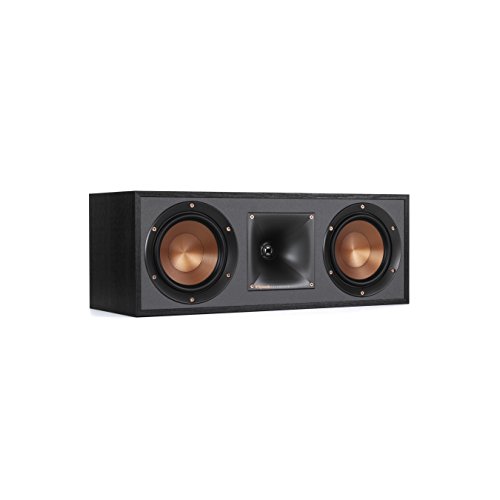
- 95 dB sensitivity for efficient output
- Dual 5.25-inch woofers
- Horn-loaded 1-inch aluminum tweeter
Best For: Small rooms needing detailed, energetic dialogue
Best Large-Woofer Value

- Dual 6.5-inch poly-graphite woofers
- Video-shielded two-way design
- 8-ohm impedance with 10–175W power range
Best For: Small rooms with generous shelf space
Compact HD Dialogue

- Compact 13.4-inch tabletop cabinet
- Aluminum-cone woofers and dome tweeter
- Includes cable and two-year warranty
Best For: Small-room TV and surround setups
Ultra-Slim TV Matching
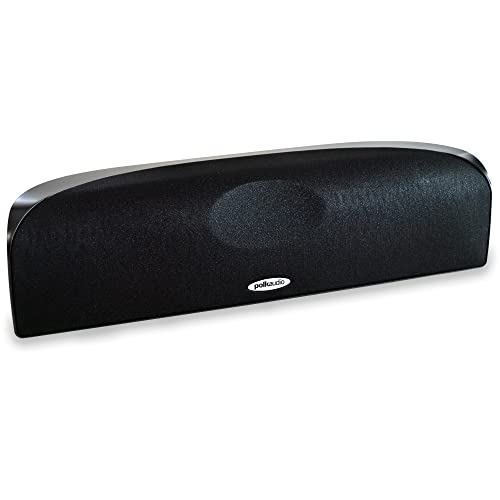
- Shelf- or wall-mountable design
- Curved high-gloss enclosure
- Time Lens technology and five-year warranty
Best For: Compact modern TV installations
High-Output Value Pick

- Dual 4-inch woofers and 1-inch tweeter
- 15-to-150-watt recommended power range
- Video-shielded cabinet with lifetime warranty
Best For: Shelf-mounted small-room home theaters
Flexible Value Pick

- Dual 5.25-inch woofers with a 1-inch tweeter
- Reversible cabinet directs sound upward
- Designed to pair with Polk Monitor speakers
Best For: Small Polk-based home theaters needing flexible placement
Compact Dialogue Specialist

- Compact 2.5-way center-channel design
- Crossover supports wider off-axis clarity
- Shelf or keyhole wall-mount placement
Best For: Small rooms where clear dialogue is the main priority
Starter Home Theater Choice
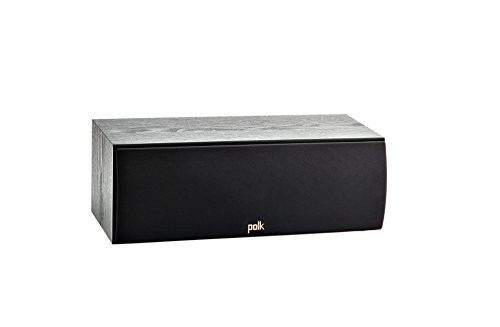
- Dual 5.25-inch woofers and silk dome tweeter
- Rear port adds punchy bass
- Timbre-matched to Polk T-Series speakers
Best For: Entry-level Polk TV, movie, music, and gaming systems
Best Slim Design – Polk Monitor XT35
For shoppers seeking center channel speakers for small rooms, the Polk Monitor XT35 is designed to sit below a TV without blocking it. Its slim 4-inch profile combines a 1-inch Terylene tweeter with four 3-inch woofers for focused dialogue and a compact home-theater installation.
Best For: Small rooms, wall mounting, and setups where TV clearance is limited.
Pros:
- Slim 24-inch-wide design helps avoid blocking the TV or IR sensor.
- Four woofers and a Terylene tweeter support clear dialogue and impactful bass.
- Compatible with Dolby Atmos and DTS:X sources.
- Can be used as a center, left, right, or surround speaker.
Cons:
- Its 24-inch width may still be too large for very narrow shelves.
- It is a wired speaker and requires an amplifier or receiver.
The XT35 is a practical choice when low-profile placement matters most. Its 25-to-200-watt recommended amplifier range and 4- or 8-ohm compatibility also give it flexibility for different home-theater systems.
Best Compact Sony Match – Sony SS-CS8M2
The Sony SS-CS8M2 is a compact option for buyers comparing center channel speakers for small rooms. Its two-way, three-driver layout uses two 3.94-inch woofers and a high-precision tweeter, while the bass-reflex enclosure is intended to support low-frequency sound with reduced distortion.
Best For: Compact Sony-based home-theater systems and tabletop placement.
Pros:
- Compact 16.93-inch-wide cabinet suits smaller spaces.
- Two woofers help support low-end frequencies.
- High-precision tweeter is designed for faithful vocal reproduction.
- Reinforced cellular cone and bass-reflex enclosure support undistorted audio.
Cons:
- Its 5.75-inch height and 8.66-inch depth require more shelf space than a slim-bar design.
- It has a 6-ohm impedance, so receiver compatibility should be checked.
The SS-CS8M2 balances a relatively compact footprint with a conventional cabinet design. It is especially sensible for listeners already using Sony AV receivers or other Sony CS-series speakers.
Best High-Sensitivity Option – Klipsch R-52C
The Klipsch R-52C is worth considering among center channel speakers for small rooms when efficient, forward sound is a priority. It pairs dual 5.25-inch spun-copper IMG woofers with a 1-inch aluminum LTS tweeter mounted to a 90-by-90-degree Tractrix horn.
Best For: Small-room home theaters that prioritize high sensitivity and detailed dialogue.
Pros:
- Dual 5.25-inch woofers provide a substantial driver complement.
- Horn-loaded tweeter supports detailed sound coverage.
- 95 dB sensitivity can help produce strong output with compatible amplification.
- 400-watt power handling provides considerable headroom.
Cons:
- Its 18.75-inch width and 7.3-inch height may be challenging on shallow or low shelves.
- The listed frequency response begins at 89 Hz, so a subwoofer may be useful for deeper bass.
The R-52C offers a powerful specification set in a reasonably compact center-channel cabinet. Measure the space carefully, since its height and depth are less low-profile than some alternatives.
Best Large-Woofer Value – BIC America DV-62CLRS
The BIC America DV-62CLRS is a substantial choice for shoppers evaluating center channel speakers for small rooms but still wanting larger woofers. It uses dual 6.5-inch poly-graphite woofers, a 0.75-inch soft-dome tweeter, and a video-shielded cabinet for home-theater placement.
Best For: Shelf-based systems with enough room for a wider, deeper center speaker.
Pros:
- Dual 6.5-inch woofers offer a larger driver configuration.
- Video-shielded, two-way, three-driver design suits TV-based systems.
- 8-ohm impedance and 10-to-175-watt recommended power range support broad amplifier compatibility.
- 38 Hz to 20 kHz listed frequency response covers a wide range.
Cons:
- At 20 inches wide, 7.65 inches high, and 10 inches deep, it is not ideal for tight spaces.
- Its 19.3-pound weight may make placement and shelf support more demanding.
- It lacks wireless connectivity.
The DV-62CLRS can work in a small room only when the furniture provides adequate clearance. Its larger cabinet and woofers favor buyers who want a traditional, full-size center speaker rather than the slimmest possible design.
Compact HD Dialogue – Yamaha NS-C210BL
For shoppers comparing center channel speakers for small rooms, the Yamaha NS-C210BL offers a relatively compact tabletop design measuring 13.4 inches wide and 4.2 inches high. Its two-way, bass-reflex cabinet combines aluminum-cone woofers with a 7/8-inch balanced dome tweeter for detailed movie and music playback.
Best For: Small-room home theaters that need a compact, tabletop center speaker with a piano-black finish.
Pros:
- Compact 13.4-inch-wide cabinet suits limited shelf space.
- Aluminum-cone woofers are designed for fast response.
- Two-way bass-reflex design supports full, dynamic HD-source sound.
- Includes a 4-meter speaker cable and a two-year parts-and-labor warranty.
Cons:
- It is a wired, 6-ohm speaker with no wireless communication.
- Tabletop mounting may offer less placement flexibility than a wall-mountable design.
- The supplied specifications list a maximum output of 80 watts, which may be limiting for some larger systems.
The NS-C210BL is a sensible choice when cabinet width and visual simplicity matter. Its compact proportions and focused two-way design make it especially practical for a modest TV setup or small surround system.
Ultra-Slim TV Matching – Polk Audio Blackstone TL1
The Polk Audio Blackstone TL1 is a useful option among center channel speakers for small rooms, with a slim 15-inch-wide by 4-inch-high profile that can sit on a shelf or mount to a wall. Its curved, high-gloss enclosure is designed to complement flat-panel TVs, while Time Lens technology is intended to improve soundstaging and imaging.
Best For: Small living rooms where a low-profile, TV-matching center speaker and flexible mounting are priorities.
Pros:
- Shelf- and wall-mountable design provides flexible placement.
- Curved high-gloss enclosure pairs well with modern flat-panel TVs.
- Uses a 1/2-inch silk dome tweeter and dual 2-1/2-inch mid/woofers.
- Includes a five-year warranty.
Cons:
- The 2-1/2-inch mid/woofers are smaller than those in some conventional center speakers.
- It uses a wired connection rather than wireless communication.
- The glossy finish may require more care to keep free of visible marks.
With its shallow four-inch height and wall-mount option, the TL1 is easy to accommodate in a compact entertainment area. It is particularly appealing when appearance and placement flexibility are as important as clear center-channel coverage.
High-Output Value Pick – Acoustic Audio PSC-43
Acoustic Audio Psc-43 Dual 4" 2-Way Center Channel Loudspeaker 150 Watt - Black Ash Finish
Check Price On AmazonThe Acoustic Audio PSC-43 gives shoppers seeking center channel speakers for small rooms a conventional two-way option with two 4-inch woofers and a 1-inch Mylar dome tweeter. Its 13.85-inch-wide cabinet is shelf-mountable, video-shielded, and finished in black ash wood grain veneer.
Best For: Small home theaters that want dual 4-inch woofers, a broad 15-to-150-watt recommended power range, and a traditional shelf-mounted cabinet.
Pros:
- Dual 4-inch woofers provide a substantial driver layout for its compact width.
- Recommended amplifier power spans 15 to 150 watts.
- Video-shielded, digitally tuned bass-reflex cabinet supports home-theater placement.
- Includes a lifetime warranty against manufacturer defects.
Cons:
- At 5.74 inches deep, it is deeper than some slim center-channel designs.
- Shelf mounting may require more open space than a wall-mountable speaker.
- Its black ash wood-grain finish may not match glossy TV components as closely as a piano-black cabinet.
The PSC-43 is a practical fit for listeners who want larger drivers without moving to a full-size center speaker. Its shelf-friendly width, video shielding, and generous recommended power range make it a flexible value-oriented choice for a compact surround system.
Flexible Value Pick – Polk Audio CS1 Series II
If you need center channel speakers for small rooms, the Polk Audio CS1 Series II offers a straightforward wired design with dual 5.25-inch woofers and a 1-inch tweeter. Its reversible cabinet can help aim dialogue toward listeners when the speaker sits below ear level.
Best For: Small-room home theaters using Polk Monitor-series speakers, especially when flexible below-TV placement is important.
Pros:
- Dual 5.25-inch woofers and a 1-inch tweeter support detailed dialogue and high-frequency response.
- Rear port is designed to provide deeper, more powerful bass.
- Reversible design helps direct sound upward from a lower shelf position.
- Can be timbre-matched with Polk Monitor 40 bookshelf speakers for smaller rooms.
Cons:
- Its 18-inch width may require careful shelf or TV-stand planning in a compact room.
- It is a passive, wired speaker and requires an AV receiver or amplifier.
The CS1 Series II is a practical choice when you want fuller center-channel output and Polk-system compatibility, but measure your available space before buying.
Compact Dialogue Specialist – Dayton Audio Classic C40
For center channel speakers for small rooms, the Dayton Audio Classic C40 focuses on clear dialogue from a compact 2.5-way design. Its dual 4-inch woofers, silk dome tweeter, sealed cabinet, and specialized crossover are intended to maintain clarity across a wider listening area.
Best For: Compact home theaters where off-axis dialogue clarity, controlled bass, and mounting flexibility matter.
Pros:
- Dual 4-inch woofers and a 1-inch silk dome tweeter reproduce voices and effects clearly.
- 2.5-way crossover is designed to improve off-axis dialogue clarity.
- Sealed acoustic-suspension cabinet helps provide controlled low-end response.
- Includes keyhole wall-mounting brackets, removable grille, and gold-plated binding posts.
Cons:
- Its 6-ohm impedance requires a compatible amplifier or home theater receiver.
- Recommended amplifier range is 15–70 watts, so system matching is important.
The C40 is a strong small-room option when intelligible speech is the priority and you want either shelf or wall placement. It does not provide wireless operation, so plan for speaker wiring.
Starter Home Theater Choice – Polk Audio T30
The Polk Audio T30 is a practical pick among center channel speakers for small rooms, combining dual 5.25-inch woofers with a 1-inch silk dome tweeter. Its rear port supports punchy bass, while the wired shelf-mount design keeps setup simple for a first home theater.
Best For: Entry-level TV, movie, music, and gaming setups built around Polk T-Series speakers.
Pros:
- Dual 5.25-inch woofers and a 1-inch tweeter support crisp dialogue and rich midrange.
- Tuned rear port is designed for natural sound and punchy bass.
- Timbre-matched to Polk T-Series speakers for a cohesive surround setup.
- Connects directly to an AV receiver with speaker wire.
Cons:
- At 19 inches wide, it may be challenging to fit on a narrow TV stand.
- The 6-ohm impedance calls for a compatible receiver or amplifier.
- It is a passive wired speaker, not a standalone TV sound system.
The T30 makes sense for shoppers starting a Polk-based theater and wanting a simple center speaker for dialogue-heavy content. Its larger cabinet footprint is the main consideration in a small room.
How We Picked the Best Center Channel Speakers for Small Rooms
We focused on models that suit limited-width media consoles, modest listening distances, and typical living-room systems. Our comparison considers cabinet size, driver configuration, dialogue-focused voicing, power handling, sensitivity, impedance, and compatibility with common AV receivers. We also included products across several price levels so you can match the speaker to your system rather than paying for performance your room cannot use.
Because a center speaker should sound consistent with the front left and right channels, brand matching remains important. However, placement and intelligibility often matter more than specifications alone, especially in a small room.
Quick Comparison
- Best for slim console placement: Polk Monitor XT35, with a low-profile design that is easier to position below a television.
- Best for detailed, dynamic presentation: Klipsch R-52C, particularly for viewers who enjoy lively home theater sound.
- Best for budget upgrades: Yamaha NS-C210BL, Polk T30, and Polk CS1 Series II.
- Best for compact satellite-style systems: Polk Blackstone TL1.
- Best for larger cabinet performance in a modest room: BIC America DV-62CLRS or Dayton Audio Classic C40, provided your console has enough space.
Key Buying Factors for Center Channel Speakers for Small Rooms
Measure the Available Space
Check the speaker’s width, height, and depth, then allow room for cables and ventilation. A speaker that blocks the television or overhangs a narrow shelf is not a practical upgrade. Slim models work well under wall-mounted displays, while taller cabinets may need a separate shelf or stand.
Prioritize Dialogue Clarity
Look for a dedicated midrange-and-tweeter arrangement, controlled dispersion, and a reputation for clear vocal reproduction. A center channel does most of the dialogue work, so intelligibility is more important than maximum bass output. Your subwoofer and front speakers can handle deeper frequencies.
Match Your Receiver and Front Speakers
Confirm that the speaker’s impedance and power requirements are suitable for your AV receiver. Whenever possible, choose a center from the same series as your left and right speakers to maintain a consistent tonal balance as sound moves across the screen.
Consider Placement and Calibration
Place the speaker as close to the screen as possible, aimed toward ear level. Do not hide it inside a closed cabinet unless the cabinet is acoustically suitable. After installation, run your receiver’s room calibration and adjust the center level if dialogue still sounds recessed.
Who Should Buy Which Center Channel Speakers for Small Rooms?
Choose a slim Polk model if console height is your main limitation. Pick Klipsch if you prefer energetic dynamics and already use Klipsch front speakers. Sony, Yamaha, and Polk’s traditional models are sensible choices for straightforward system upgrades and brand matching. The BIC America, Acoustic Audio, and Dayton options make more sense when you have adequate shelf depth and want a fuller cabinet design. For compact surround packages or minimalist setups, the Polk Blackstone TL1 is the easiest fit.
Ultimately, the right center channel speaker is the one that fits securely, matches your system, and places clear dialogue directly at the screen. In small rooms, careful positioning and receiver calibration can deliver as much benefit as moving to a larger speaker.