A strong center channel speaker makes movie dialogue easier to understand while keeping voices anchored naturally to the screen. The best sealed center channel speakers can also simplify placement when your room or cabinetry limits speaker depth and height.
This roundup compares 10 options from Klipsch, SVS, Polk Audio, Sony, and Yamaha, with attention to dialogue clarity, cabinet size, sensitivity, tonal matching, and everyday home theater value.
Best 10 Sealed Center Channel Speakers Picks for 2026
High-Efficiency Detail

- Horn-loaded titanium tweeter for detailed highs
- Dual 5.25-inch Cerametallic woofers
- Rear Tractrix port and five-year warranty
Best For: Energetic home-theater dialogue and high-output front-stage sound
Three-Way Dialogue Anchor

- True three-way crossover design
- Dual 5.25-inch woofers with rear port
- Clear aluminum dome tweeter
Best For: Premium home theaters prioritizing dialogue clarity and high output
Low-Profile Horn Clarity
- 90° x 90° Tractrix horn
- One-inch LTS aluminum tweeter
- Slim cabinet with magnetic grille
Best For: Compact home theaters focused on clear dialogue and modern styling
Compact Everyday Value

- Two-way, three-driver configuration
- Two 3.94-inch woofers and precision tweeter
- Compact design for smaller spaces
Best For: Compact Sony-centered home-theater and TV setups
Best Slim Design
Polk Audio Signature Elite ES35

- Slim center-channel design for shelf or wall placement
- Six 3-inch woofers with a 1-inch Terylene tweeter
- Power Port technology supports impactful bass
Best For: Low-profile home-theater installations
Best Premium Dialogue Detail
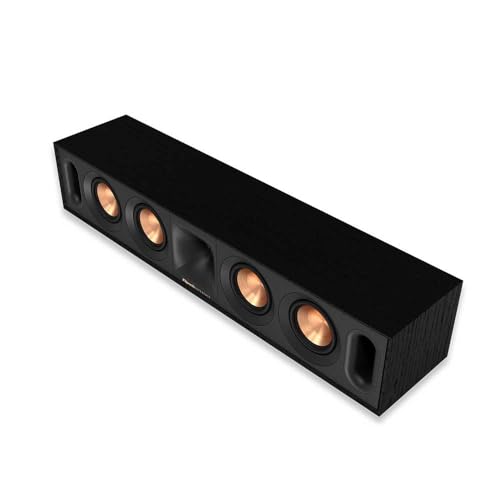
Klipsch Reference Premiere RP-504C II

- Larger Tractrix horn targets crisp dialogue
- Four 5.25-inch Cerametallic woofers
- Braced cabinet with a magnetic removable grille
Best For: Large, dedicated home-theater rooms
Best Compact Value
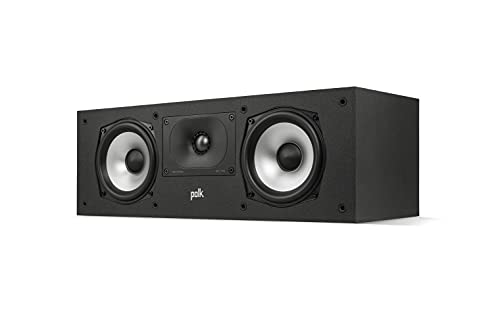
- Compact cabinet fits consoles and bookshelves
- 1-inch tweeter with two 5.25-inch woofers
- Timbre-matched Polk Monitor XT system option
Best For: Space-conscious, affordable home theaters
Detailed Dialogue Pick
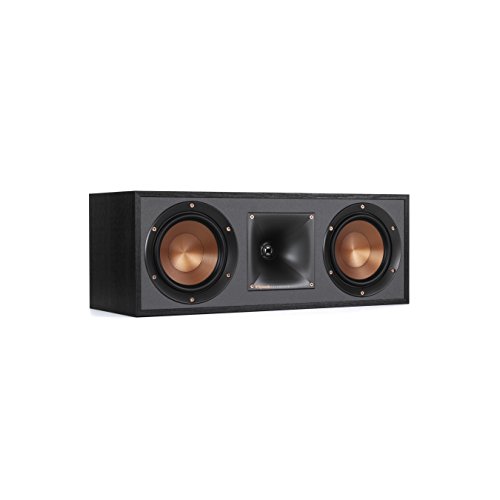
- Dual 5.25-inch spun-copper IMG woofers
- Tractrix horn with aluminum tweeter
- 95dB sensitivity and 400-watt handling
Best For: High-output home theater dialogue
Compact TV Match
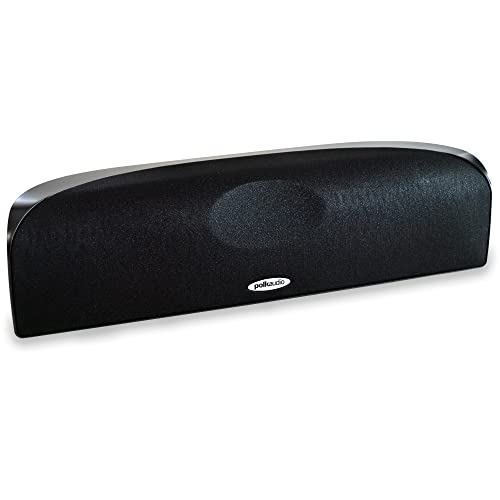
- Slim 15-inch-wide curved enclosure
- Time Lens technology for imaging
- Shelf- or wall-mountable design
Best For: Compact flat-panel TV setups
HD Sound Value
Yamaha NS-C210BL Center Speaker

- Light aluminum-cone woofers
- 7/8-inch balanced dome tweeter
- Compact piano-black tabletop cabinet
Best For: Slim music-and-movie systems
High-Efficiency Detail – Klipsch RP-504C
The Klipsch RP-504C is a powerful option for shoppers seeking sealed center channel speakers with clear dialogue and strong front-stage presence. Its horn-loaded titanium tweeter, Cerametallic woofers, and rear Tractrix port are designed for detailed, efficient home-theater performance.
Best For: Home entertainment systems that need energetic dialogue, wide front-stage output, and a bold ebony finish.
Pros:
- 90° x 90° Tractrix horn and phase plug support smooth high-frequency response.
- Vented titanium tweeter and Linear Travel Suspension technology help reduce distortion.
- Dual 5.25-inch Cerametallic woofers and rear Tractrix port support efficient low-frequency output.
- Includes a five-year manufacturer warranty.
Cons:
- The rear port may require careful placement near a wall.
- It is a wired speaker and is not water resistant.
The RP-504C is a strong fit when high output and horn-loaded clarity are priorities. Its larger driver array and rear-port design make it especially suitable for a dedicated home-theater setup with room for proper placement.
Three-Way Dialogue Anchor – SVS Prime Center
The SVS Prime Center is a substantial choice among sealed center channel speakers, using a true three-way crossover to keep dialogue, vocals, and transitions composed. Its aluminum tweeter, dual 5.25-inch woofers, and rear-ported cabinet are built for revealing home-theater performance.
Best For: Viewers who want crisp dialogue, broad dispersion, and strong output from a premium black ash center speaker.
Pros:
- True three-way crossover supports smooth transitions and phase coherency.
- One-inch aluminum dome tweeter is designed for clear high-frequency reproduction at high volumes.
- Dual 5.25-inch woofers and rear port provide strong output and bass support.
- Cast ABS-fiberglass baskets help maintain component alignment and reduce unwanted resonances.
Cons:
- At 20 pounds, it is comparatively heavy for a center speaker.
- The rear-ported cabinet needs thoughtful placement.
- It is wired and has no wireless communication technology.
The Prime Center emphasizes composure and clarity rather than a compact footprint. Its three-way architecture makes it a compelling option for larger systems where intelligible dialogue and effortless dynamics matter.
Low-Profile Horn Clarity – Klipsch R-30C
The Klipsch R-30C is a practical pick for sealed center channel speakers when clear dialogue and a slim, modern cabinet are important. Its 90° x 90° Tractrix horn, aluminum tweeter, and tapered-array crossover are designed to improve directivity and midrange definition.
Best For: Television and projector setups that need a wide center speaker with a low-profile appearance and focused dialogue.
Pros:
- Expanded 90° x 90° Tractrix horn helps control directivity across a broader frequency range.
- Linear Travel Suspension aluminum tweeter is designed to minimize distortion.
- Tapered-array crossover supports dispersion and dialogue definition.
- Hidden fasteners and a magnetic grille create a clean, modern appearance.
Cons:
- The 3.5-inch woofers are smaller than those in the other Klipsch model listed here.
- Its listed frequency response begins at 78 Hz, so a subwoofer may be useful for deeper bass.
- It is a wired tabletop speaker rather than a wireless model.
The R-30C balances Klipsch’s horn-loaded presentation with a relatively low-profile design. It is best suited to users who value intelligible dialogue and neat installation over the deepest standalone bass.
Compact Everyday Value – Sony SS-CS8M2
The Sony SS-CS8M2 is a compact option for shoppers comparing sealed center channel speakers for smaller rooms. This two-way, three-driver design combines two 3.94-inch woofers, a high-precision tweeter, and a bass-reflex enclosure for dialogue-focused home-theater sound.
Best For: Small-space television or home-theater systems, especially setups using Sony AV receivers.
Pros:
- Two 3.94-inch woofers support low-end frequencies in a compact cabinet.
- High-precision tweeter is designed for faithful vocal reproduction.
- Reinforced cellular cones help support undistorted audio.
- The compact design is suitable for smaller spaces and Sony system matching.
Cons:
- Its 55 Hz listed frequency response offers less low-end extension than larger alternatives.
- The speaker uses a six-ohm impedance, so receiver compatibility should be checked.
- The warranty is one year.
The SS-CS8M2 keeps the design straightforward and space-conscious. It makes sense when compact dimensions, vocal clarity, and compatibility with Sony components are more important than maximum scale or bass extension.
Best Slim Design – Polk Audio Signature Elite ES35
The Polk Audio Signature Elite ES35 is a strong choice when you want sealed center channel speakers with a slim profile and clear, room-filling output. Its six 3-inch woofers, 1-inch Terylene tweeter, and Power Port technology are designed for detailed dialogue, impactful bass, and flexible home-theater placement.
Best For: Home theaters needing a slim center speaker that can sit on a shelf or mount below a TV.
Pros:
- Slim design fits neatly beneath many TVs and supports wall mounting.
- Six 3-inch woofers and a 1-inch tweeter support clear, spacious sound.
- Power Port technology is designed to deliver cleaner, more impactful bass.
- Can also be used as left/right surround speakers.
Cons:
- Shelf or stand for placement is sold separately.
- Its 20-inch width may still require a suitably sized shelf or console.
- It is not water resistant.
The ES35 stands out for combining a low-profile cabinet with a six-woofer layout and multiple placement options. It is especially practical when TV clearance and room integration matter as much as dialogue performance.
Best Premium Dialogue Detail – Klipsch Reference Premiere RP-504C II
The Klipsch Reference Premiere RP-504C II is a substantial option among sealed center channel speakers, built for listeners who prioritize crisp dialogue and high-efficiency performance. Its larger Tractrix horn, vented titanium tweeter, four Cerametallic woofers, and braced cabinet target detailed, powerful home-theater sound.
Best For: Dedicated home theaters with room for a large tabletop center speaker and a preference for detailed dialogue.
Pros:
- Larger 90° x 90° Tractrix horn is designed to improve dialogue clarity.
- Vented LTS titanium tweeter supports detailed performance with reduced distortion.
- Four 5.25-inch Cerametallic woofers provide a high-output driver array.
- Braced cabinet and divided enclosure help minimize vibrations.
Cons:
- Its 32.06-inch width and 36-pound weight require substantial placement space.
- Designed for tabletop mounting rather than wall mounting.
- Wireless communication is not supported.
The RP-504C II is the most imposing model in this group, so it is less suited to compact consoles. For a properly sized setup, its horn-loaded design and four-woofer cabinet make it a compelling choice for dialogue-focused movie playback.
Best Compact Value – Polk Audio Monitor XT30
The Polk Audio Monitor XT30 is a practical pick among sealed center channel speakers for buyers who want clear dialogue without a particularly large cabinet. Its 1-inch tweeter and two 5.25-inch woofers are designed for smooth midrange bass, while the compact enclosure fits consoles, bookshelves, stands, and tabletops.
Best For: Affordable home-theater upgrades where cabinet space and straightforward placement are priorities.
Pros:
- Compact 19.9-inch-wide cabinet fits many AV consoles and bookshelves.
- Two 5.25-inch woofers and a 1-inch tweeter support clear, dynamic sound.
- Compatible with Dolby Atmos and DTS:X surround setups.
- Can be paired with other Polk Monitor XT components for a timbre-matched system.
Cons:
- Tabletop mounting limits placement compared with wall-mountable models.
- Its two-woofer design is less substantial than the larger Klipsch model.
- It is not water resistant and has no wireless communication.
The XT30 balances useful output with an easier-to-place enclosure, making it a sensible starting point for a compact surround system. It also offers a clear upgrade path within Polk’s Monitor XT lineup.
Detailed Dialogue Pick – Klipsch R-52C Center Speaker
For a home theater that needs clear, forward dialogue, the Klipsch R-52C is a strong option among sealed center channel speakers. Its dual 5.25-inch spun-copper IMG woofers, aluminum tweeter, and 90×90-degree Tractrix horn are designed for detailed sound, while the wood enclosure gives it a substantial, traditional speaker build.
Best For: Home theater systems where dialogue clarity and high sensitivity are priorities.
Pros:
- Dual 5.25-inch spun-copper IMG woofers
- Aluminum LTS tweeter with Tractrix horn
- 95dB sensitivity and 400-watt power handling
- Includes a grille and carries a six-year parts-and-labor warranty
Cons:
- Larger and heavier than the compact alternatives in this roundup
- Its 89Hz–21kHz ±3dB response may make a subwoofer useful for deeper bass
The R-52C is the most substantial choice here, pairing efficient output with a conventional floor- or shelf-oriented cabinet. Check the 18.75-inch width and 7.3-inch height before buying to ensure it fits beneath your display.
Compact TV Match – Polk Audio Blackstone TL1
The Polk Audio Blackstone TL1 is a compact choice among sealed center channel speakers, with a curved high-gloss enclosure that can complement a flat-panel TV. Its Time Lens technology is intended to improve soundstaging and imaging, while the small cabinet supports shelf or wall mounting.
Best For: Space-conscious TV setups that need a lightweight, visually tidy center speaker.
Pros:
- Compact 15-inch-wide, 4-inch-high cabinet
- Time Lens technology for improved soundstaging and imaging
- 1/2-inch silk dome tweeter with dual 2.5-inch mids/woofers
- Supports shelf or wall mounting and includes a detachable grille
Cons:
- Smaller drivers offer less physical scale than the larger Klipsch design
- Listed speaker size and output specifications are relatively modest
The TL1 is best when cabinet size and appearance matter as much as basic center-channel duties. Its 3.4-pound weight and flexible mounting options make placement easier in compact entertainment spaces.
HD Sound Value – Yamaha NS-C210BL Center Speaker
The Yamaha NS-C210BL is a straightforward center speaker for music and movies, making it a practical option among sealed center channel speakers. It uses light aluminum-cone woofers for fast response, a 7/8-inch balanced dome tweeter, and a bass-reflex enclosure with a piano-black finish.
Best For: Entry-level or mid-sized home entertainment systems seeking a slim, conventional center speaker.
Pros:
- Light aluminum-cone woofers designed for fast response
- 7/8-inch balanced dome tweeter
- Compact 13.4-inch-wide tabletop cabinet
- Piano-black finish and included speaker cable
Cons:
- 80-watt maximum output is lower than the Klipsch model’s listed handling
- Tabletop mounting may offer less placement flexibility than wall-mountable designs
The NS-C210BL balances a modest footprint with a two-way design and a finish suited to contemporary interiors. Its 6-ohm impedance should be considered alongside your receiver’s specifications before purchase.
How We Picked the Best Sealed Center Channel Speakers
We focused on center speakers designed for the dialogue-heavy role in a home theater system, prioritizing clear vocal reproduction, controlled directivity, practical placement, and compatibility with common AV receivers. We also considered cabinet dimensions, driver layout, sensitivity, finish options, and brand ecosystem, since matching the center channel to your left and right speakers can improve tonal consistency.
“Sealed” is often used broadly in shopping searches, but not every center speaker has the same enclosure design. Verify the manufacturer’s specifications before buying if a genuinely acoustic-suspension cabinet is essential for your setup.
Quick Comparison
| What to Compare | Why It Matters |
|---|---|
| Speaker width | Determines whether it fits beneath or beside your display. |
| Height and depth | Affects cabinet clearance, screen obstruction, and shelf placement. |
| Driver layout | Influences vocal dispersion and how dialogue sounds off-axis. |
| Sensitivity | Higher sensitivity can produce strong output with less amplifier power. |
| Timbral matching | Using the same series as your front speakers helps voices pan smoothly. |
Key Buying Factors for Sealed Center Channel Speakers
Dialogue Clarity and Dispersion
Look for a dedicated midrange and tweeter arrangement that keeps speech intelligible across the seating area. Horn-loaded designs can provide high sensitivity and forward detail, while conventional dome-tweeter systems may offer a smoother presentation. Your room acoustics and listening distance matter as much as the specifications.
Size and Placement
Measure the available width, height, and depth before choosing. Slim models work well below wall-mounted televisions or in narrow media consoles, while larger cabinets may deliver greater output and fuller vocal weight. Aim the speaker toward ear level when possible, and avoid blocking ports or placing it tightly against a wall unless the manufacturer permits it.
System Matching
For the most consistent front soundstage, match the center speaker’s series and voicing to your left and right channels. If you are building around existing speakers, use your receiver’s calibration system and check crossover settings rather than assuming a larger center is automatically better.
Power, Bass, and Room Size
Check impedance and recommended amplifier power against your AV receiver. A center channel is not a substitute for a subwoofer, so prioritize clean midrange output and reliable dialogue before chasing deep bass. Larger rooms and louder listening levels generally benefit from a higher-sensitivity model with more driver area.
Who Should Buy Which Sealed Center Channel Speakers?
- For a high-output cinema presentation: Consider a Klipsch model with efficient horn-loaded technology, especially if you watch at higher volume or sit farther from the screen.
- For balanced, premium home theater sound: The SVS Prime Center is a strong fit for listeners who want detailed dialogue and a substantial cabinet without moving to a full-size professional speaker.
- For low-profile installations: Polk’s slim ES35 is suited to wall-mounted displays, narrow consoles, and rooms where cabinet height is limited.
- For compact budgets and smaller rooms: Polk, Sony, and Yamaha’s smaller center-channel options can provide a meaningful dialogue upgrade without requiring a large cabinet.
- For an existing brand-matched system: Choose the center from the same speaker family as your front left and right channels whenever possible.
Before ordering, confirm dimensions, finish, return terms, and whether the listing includes one speaker or a pair. Proper placement and receiver calibration can make as much difference as the model itself.